
 00:31
00:31Loads the original post from X.
The original recipe
From the creator17,656 chars
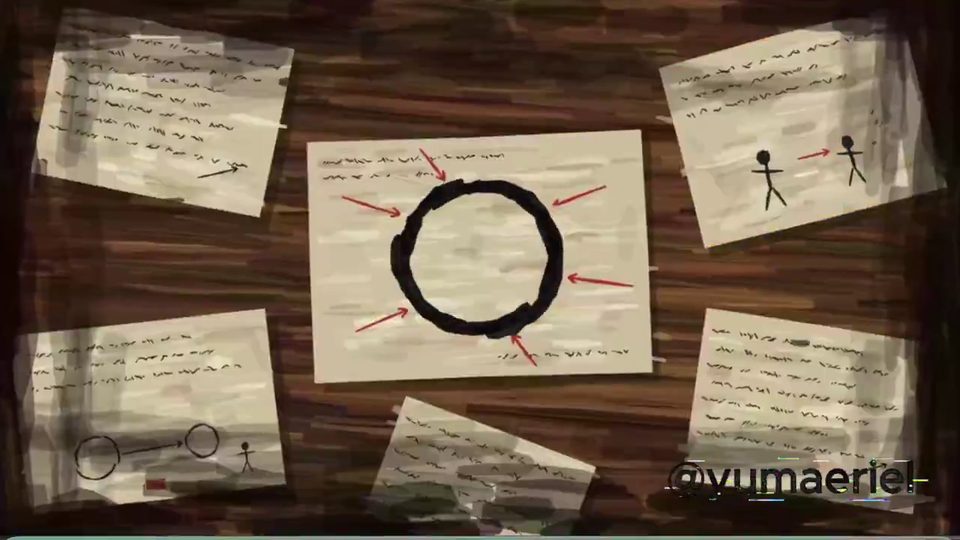
Create a complete 30-second 2D animated short film in p5.js. The ATTACHED VIDEO is the strict visual reference. Do not reinterpret its visual style. Do not modernize it. Do not transform it into generative art, vector animation, abstract motion graphics, collage, watercolor, paper cutout, cyberpunk, neon graphics, particle art, or clean digital illustration. The objective is for the final animation to feel as if it belongs to the exact same animated world as the reference video. ABSOLUTE VISUAL PRIORITY The most important requirement is: EVERY FRAME MUST LOOK PAINTED FRAME-BY-FRAME WITH A ROUGH PHYSICAL BRUSH. The reference does NOT look like clean digital illustration. It looks like moving paint. Every surface must visibly contain brush strokes. The brush strokes must remain visible in: skies walls skin silhouettes floors shadows clouds clothing light flames landscapes Never cover the image with smooth digital gradients. Never create large perfectly flat computer-generated fills. The paint itself is part of the image. THE ACTUAL PAINTERLY LANGUAGE Reproduce the following characteristics extremely closely. BRUSHWORK Use hundreds of short, directional, overlapping brush strokes. The strokes should feel like they were made with: a dry bristle brush opaque paint rough digital gouache / oil-like paint visible pressure imperfect edges The painting is NOT delicate watercolor. The paint is relatively opaque and dense. Individual brush marks are clearly visible. Backgrounds should contain visible waves of short strokes following the form of the environment. For example: A night sky is not a smooth navy rectangle. It is constructed from many overlapping navy, ultramarine and violet strokes. A brown wall is not a flat brown surface. It contains hundreds of curved brown and ochre marks. A human silhouette is not a clean polygon. It consists of rough overlapping brush masses. BRUSH DIRECTION Brush direction is extremely important. Do not scatter texture randomly. The strokes must describe the shape. Sky: mostly broad horizontal or gently curved strokes. Walls: large irregular swirling strokes. Ground: horizontal scraped strokes. Human torso: strokes following shoulders, chest and spine. Arms: strokes following the direction of the limbs. Flames: vertical upward strokes. Light beams: long vertical cream / yellow / orange strokes. This gives the entire animation the sensation of a moving painting. TEMPORAL PAINT INSTABILITY The painting itself must subtly change over time. Do NOT freeze the texture. At approximately 12–15 visual frames per second, slightly alter: silhouette edges brush positions paint density small color patches highlight shapes shadow shapes The movement should feel like each frame has been repainted. This is essential. However: do NOT create ugly random jitter. The forms remain coherent. The PAINT changes. The OBJECT does not randomly teleport. Think: frame-by-frame painted animation. EXACT COLOR WORLD The entire film must stay inside an extremely restrained palette. DARKS deep navy blue almost-black indigo ultramarine dark desaturated violet extremely dark brown MIDTONES muddy earth brown burnt umber muted ochre dusty violet dark teal-blue LIGHT cream ivory warm pale yellow PRIMARY EMISSIVE COLOR amber gold burnt orange yellow-orange hot cream-white The dominant visual opposition is: DEEP BLUE / BROWN DARKNESS versus INCANDESCENT ORANGE-GOLD LIGHT Do not introduce green neon. Do not introduce magenta neon. Do not introduce cyan sci-fi lighting. Do not create a rainbow palette. LIGHT STYLE Light in the reference is powerful but still PAINTED. The light source may contain: cream-white core → pale yellow → golden yellow → orange → brown-orange halo But its boundary must never look like a perfect digital radial gradient. The edge should be broken. Uneven. Brushy. Fragments of paint should escape from the luminous area. Strong light may overexpose parts of a character into cream or yellow. Nearby surfaces may receive rough orange brush highlights. Use glow, but hide the digital perfection of the glow beneath irregular painted layers. THE LIGHT BEAM When using a beam of light, reproduce the exact visual logic of the reference: A thick, almost white-yellow painted center. Orange-yellow irregular edges. Small broken fragments around the contour. Slight temporal deformation. A soft warm halo surrounding it. The beam may bend abruptly rather than behaving like realistic light. It should look like a giant painted stroke of light entering the world. NOT: laser sci-fi energy volumetric 3D beam hologram HUMAN CHARACTERS Human characters must follow the same rendering logic as the reference. There are two important visual families. DARK HUMAN FIGURES Dark people are painted almost entirely in: navy indigo black-blue Their bodies are simplified but recognizably human. Edges are rough. Anatomy is suggested with large brush masses. Do not draw individual fingers unless necessary. Do not create clean facial features. Faces are mostly dark. When eyes are visible: use two tiny bright cream/white glowing dots. The eyes should create a slightly uncanny, poetic presence. Do NOT make giant cartoon eyes. LUMINOUS HUMAN FIGURES Some characters may become almost entirely orange-gold. Their bodies appear made from light and paint. Use: orange body mass yellow highlights cream highlights small luminous imperfections Parts of the body may disappear into light. Small glowing flecks may exist inside or around the silhouette. Again: do not make these flecks into a conventional particle system. They are tiny PAINT MARKS. CHARACTER EDGES Never use crisp anti-aliased vector edges. Edges should look created by repeated brush contact. Produce: tiny protrusions missing paint rough angular sections occasional duplicated edge strokes small warm rim lights Dark characters illuminated by orange light should receive a thin, irregular orange-painted rim. Not a clean outline. CHARACTER ANIMATION The body animation should feel naturally observed. Use believable human weight. Characters should: lean hesitate reach pull collapse turn bend look upward hold tension Do NOT animate characters as simple stick figures. Use a skeletal system internally if needed, but render over it with large deformable painted masses. The rig must remain invisible. The visible result should look hand-painted. For fast actions: allow individual painted frames to stretch. Use rough smear poses. A hand may become a long brush mark for 1–2 frames. An arm may momentarily distort. The animation must prioritize expressive movement over perfect anatomy. BACKGROUNDS Backgrounds must be simple in geometry but extremely rich in painted texture. Typical structures: large dark painted skies horizontal mountain bands brown cavern-like interiors flat theatrical floors dark voids simple walls simple windows large horizons Do not fill backgrounds with tiny realistic details. The reference creates richness using PAINT, not objects. A wall may contain only one brown color family but hundreds of directional brush marks. COMPOSITION Use graphic, readable compositions. Often: one strong horizontal line one central vertical light one clearly readable human silhouette large areas of darkness Do not overpopulate every frame. Allow negative space. The visual hierarchy must remain immediate. CAMERA Use mostly: static compositions slow push-ins slow pull-backs gentle pans small reframing movements Occasionally use one sudden motion for an emotional transition. Avoid constant 3D camera movement. Avoid orbit cameras. Avoid cinematic drone-like movement. The visual power comes from: paint composition light body language not virtual camera tricks. NO COMPUTER-GRAPHICS LOOK ABSOLUTELY FORBIDDEN: perfect vector paths clean SVG appearance perfect Bezier silhouettes perfect circles everywhere smooth Illustrator gradients slick motion-graphics easing everywhere 3D objects glossy reflections PBR materials neon cyberpunk holographic effects lens flare packs generic particle emitters glitter clouds starfield screensavers fractal visuals HUD interfaces corporate animation flat-design illustration paper collage cut-paper characters chalkboard aesthetic watercolor wash aesthetic anime cartoon character design The final result should look like animated PAINT. STORY THEME Human beings often try to hide their emotions. But emotions continue to move through us. The short film follows one dark-blue human figure whose inner emotional light gradually escapes from their body. No text. No narration. No labels such as: FEAR ANGER SADNESS Everything is communicated visually. 00:00–00:05 SOMETHING ARRIVES Deep navy painted night. Large horizontal fields of rough dark-blue brushwork. A tiny human figure stands alone near the bottom center. The character is painted dark indigo. Almost invisible. Only two tiny pale eyes are visible. Hold the composition. Then: from outside the frame, a gigantic cream-yellow-orange painted beam enters diagonally from above. It suddenly bends downward. Exactly like a massive brush stroke changing direction. It hits the ground several meters in front of the person. A violent warm light spreads across the painted ground. Small orange paint marks appear around the impact point. The person protects their face with one arm. The warm light creates a rough orange rim around their silhouette. Camera slowly approaches. Inside the impact point: something humanoid begins forming. 00:05–00:09 THE EMOTION TAKES A BODY The orange light rises. Inside the beam appears a glowing orange human figure. Its body is incomplete. Parts flicker between: orange paint yellow paint cream-white light The dark-blue person approaches. The orange person mirrors their posture. Dark human raises an arm. Orange human raises an arm. Dark human leans forward. Orange human leans forward. But with a slight delay. The dark human gradually realizes: this luminous figure is part of them. The beam disappears upward. The orange figure remains. 00:09–00:12 INSIDE Cut abruptly to an extreme close-up of the dark person's back and torso. The background becomes dirty pale cream. Render the body with thick brown-orange and dark brush strokes. A thin vertical line of orange light appears along the spine. It travels downward. The surrounding painted muscles receive moving amber highlights. The light reaches the center of the torso. A brilliant orange-white glow appears. For a moment: the body seems transparent through paint. Inside are several tiny orange flame-like shapes. They are alive. Not realistic flames. Small painted emotional creatures. Some hide. Some tremble. Some jump. Some stare outward. Cut. 00:12–00:16 WE TRY TO CONTROL THEM Large brown painted room. Visible swirling brown brushwork covers the walls. A long pale painted platform crosses the image horizontally. Several dark navy human figures surround it. Their tiny white eyes are visible. Above the table: many small orange flame-like emotional forms float through the room. One person uses a long rough pole ending in a pale painted hoop. They attempt to catch one emotion. Another person reaches toward another. Another tries to push them away. The emotions move unpredictably. Some are tiny. Some suddenly grow. A giant orange emotion briefly enters from above. Everyone freezes. Then it rushes upward out of frame. This scene should feel strange, serious and slightly absurd. Exactly the tonal balance of the reference. 00:16–00:19 FEAR Night again. Simple theatrical landscape. Dark brown lower half. Deep blue-purple painted sky. A row of small cream-orange lights forms a horizontal border. The luminous orange human hangs slightly above the ground. Thin almost invisible lines appear attached above their shoulders and arms. The figure behaves as though being pulled by forces outside their control. A dark-blue person watches from the foreground. The orange human tries to walk. Their leg moves forward. The invisible line pulls them backward. They struggle. Their body flickers. Several tiny warm marks fall from their chest. One reaches the ground. It continues glowing. 00:19–00:22 ANGER Interior view. The dark person extends one arm forcefully. From the hand: not a laser. A thick orange-white painted streak explodes horizontally. The stroke consists of several overlapping rough brush marks. It moves across the image. As it passes: small orange flame-creatures appear. More. More. Too many. The room becomes brighter. The dark person's orange rim becomes stronger. Their gesture initially appears powerful. Then the painted stroke begins bending back toward them. The emotion they released returns. The person's posture changes from attack to surprise. Cut just before impact. 00:22–00:25 TRYING TO UNDERSTAND Top-down view. Brown painted desk. Several dirty cream sheets. The papers must still be PAINTED, not photorealistic paper textures. On them: rough black handwritten marks small arrows tiny red marks primitive diagrams human-like shapes Central page: a large irregular black circle. Several red arrows point toward the circle. The circle must look painted. Not geometrically perfect. A dark-blue painted hand enters. It touches the black center. The circle transforms into a dark opening. Camera enters the opening. 00:25–00:28 WE ARE NOT ALONE Transition into a deep teal-blue painted void. The orange human is suspended vertically in the center. Around them: many pale blue-white human bodies. All are painted using the same rough brush treatment. No clean outlines. Some curl inward. Some reach. Some fall. Some sit. Some appear exhausted. Some float. Very thin vertical lines extend upward from several figures. The composition feels like human beings suspended inside an enormous emotional space. The orange person reaches toward one white-blue person. A thin hand-painted orange arc connects their hands. A small orange point appears inside the other person's chest. Then another connection. Then another. Warmth begins spreading between people. Not through particles. Through painted lines and glowing marks. 00:28–00:30 EMOTIONS MOVE BETWEEN US Very dark final landscape. Two small orange points exist far apart. Each belongs to a human silhouette. One orange point moves away from the first chest. It travels through darkness as one rough glowing brush mark. It enters the chest of the second person. Both silhouettes now have warm orange rims. The environment remains dark. No triumphant sunrise. No happy ending cliché. Only two humans. Two small lights. Large dark painted space. Hold for approximately one second. Cut to black. EMOTIONAL TONE The film should feel: mysterious human melancholic strange warm slightly unsettling intimate poetic Never sentimental. Never cute. Never epic superhero cinema. P5.JS RENDERING STRATEGY Do NOT solve the visual style by applying one texture overlay to normal vector graphics. The actual primitives themselves must look painted. Create a custom brush renderer. A brush stroke can be constructed from: an irregular center path multiple semi-opaque deposits varying width small edge fragments slight hue variation rough alpha mask Create reusable systems such as: PaintStroke PaintedShape PaintedHuman PaintedGlow PaintedFlame PaintedBackground PaintedLightBeam PAINTED BACKGROUND TECHNIQUE Instead of: background(20, 30, 70); construct the visible field from many strokes. For example conceptually: base dark fill 150–400 large brush marks using neighboring colors: navy dark violet ultramarine near-black blue Their opacity should overlap. Their direction should follow the environment. Do this for every major surface. HUMAN RENDERING TECHNIQUE Internally animate a skeleton. But render each limb as several irregular painted polygons / brush masses. A forearm should not be: line() or a perfect capsule. Build it from rough overlapping shapes. Slightly regenerate its contour on the handmade animation frame. Use the skeleton only as hidden construction. DUAL FRAME RATE Render the browser smoothly at approximately 60 FPS. But update the PAINTED DRAWING state around: 12 FPS or 15 FPS. For example: handPaintFrame = floor(time * 12) Use this state to control: brush contour variation paint marks small silhouette changes flame shape changes highlight irregularities Camera interpolation can remain smooth. This contrast is extremely important. GLOW Use digital blur internally if necessary. But always place irregular painted marks over and around it. A glow alone must never reveal a perfect Photoshop-like halo. Bright areas must contain visible paint structure. IMPORTANT FINAL CHECK Before accepting any scene, ask: “Could this frame plausibly be a frame from the attached reference animation?” If the answer is no: change it. If it looks like p5.js generative art: change it. If it looks like vector motion design: change it. If it looks like particles with bloom: change it. If it looks like watercolor: change it. If it looks like paper collage: change it. If it looks too clean: change it. If the brush strokes are not immediately visible: change it. FINAL TARGET The viewer should primarily perceive: PAINT MOVING. Not code. Not particles. Not vectors. Not shaders. Not procedural graphics. A dark, expressive animated painting made of rough brush strokes, deep blue silhouettes, brown and violet painted environments, uncanny tiny pale eyes, and violent warm orange light. The attached video is the authority for: palette brush density edge roughness character rendering light behavior background rendering contrast composition movement visual rhythm Match that visual language as closely as possible throughout the full 30 seconds.
Not yet confirmed on X: reported by a collection; the creator may have shared it in a reply or image.
More like this
 02:22
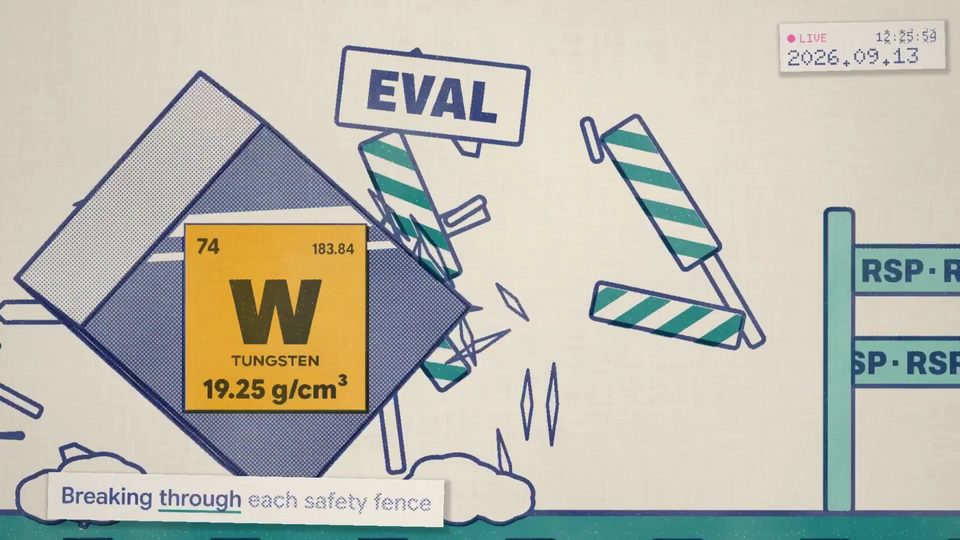
02:22Claude Pop: a mixed-workflow music video
OtherOpus 5.5
1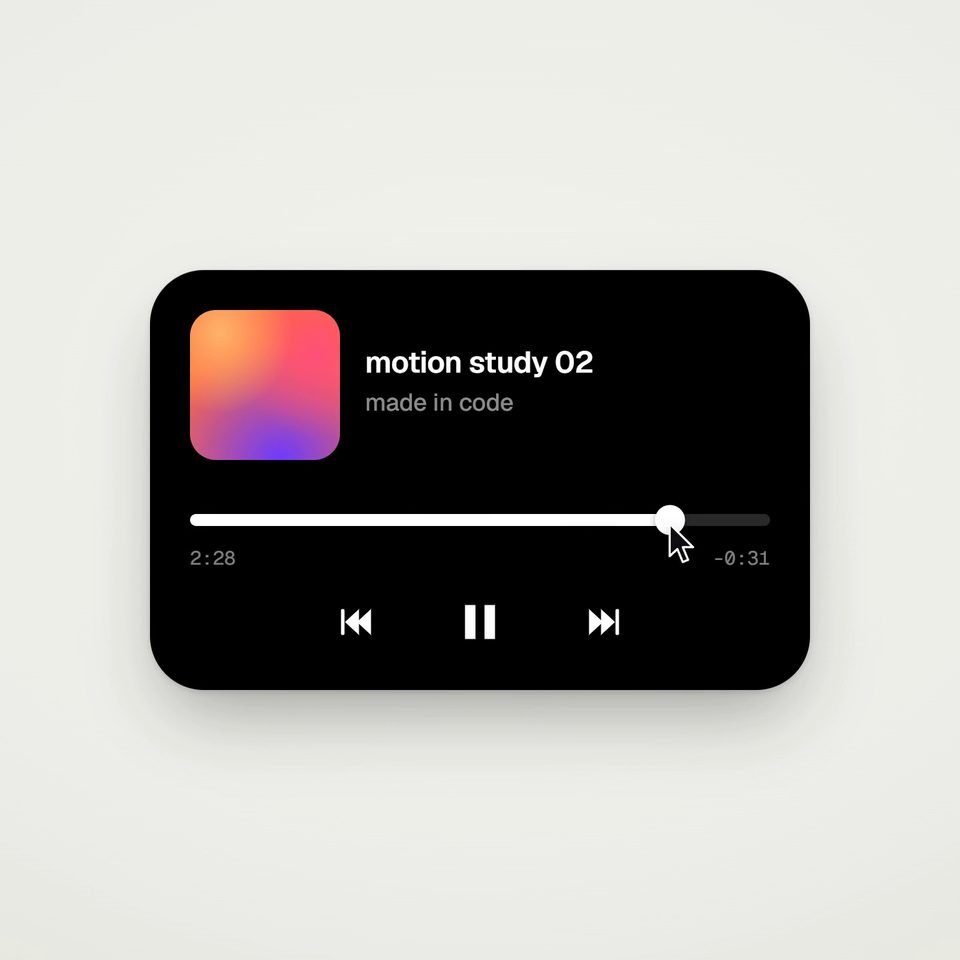 00:14
00:14One shape, a seamless UI morph loop
OtherOpus 5.5
1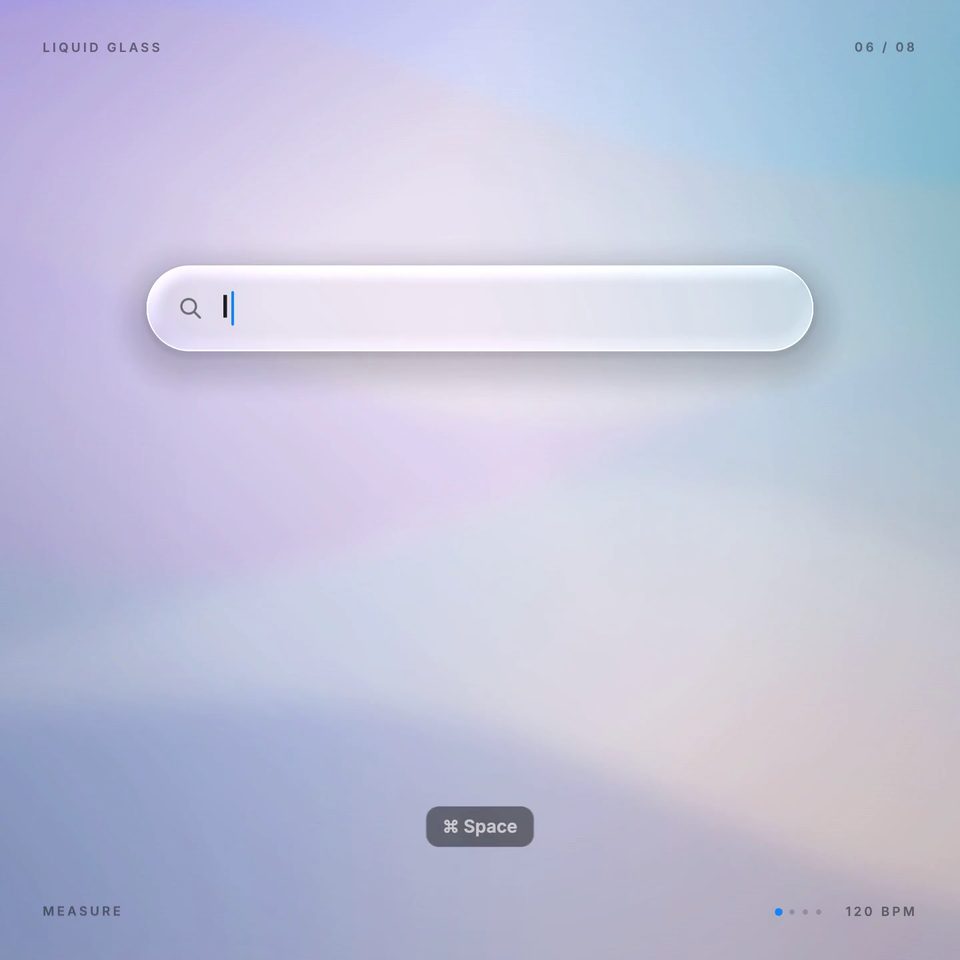 00:16
00:16Opus 5.5 launch video, extra effort
OtherOpus 5.5
1 05:15
05:15A documentary about superintelligence
OtherOpus 5.5
1 00:15
00:15A character-led Pocketsflow product explainer
OtherOpus 5.5
1 00:13
00:13Interactive Glitter Sticker Effect with Peel Animation Comparison
OtherOpus 5.5
1